Code reviews are essential for quality, knowledge sharing, and catching bugs early—but they can become bottlenecks if not done well. These practices help teams review code faster while maintaining high standards.
Before the Review: Preparation
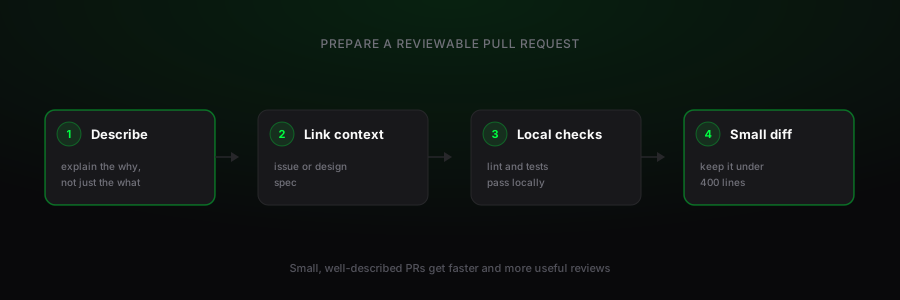
- Keep PRs small: Aim for < 400 lines changed per review
- Write clear descriptions: Explain the why, not just the what
- Include testing instructions: How to verify the changes work
- Link to related issues: Connect to tickets or design docs
- Run linters and tests locally: Don't waste reviewers' time on fixable issues
During the Review: What to Focus On
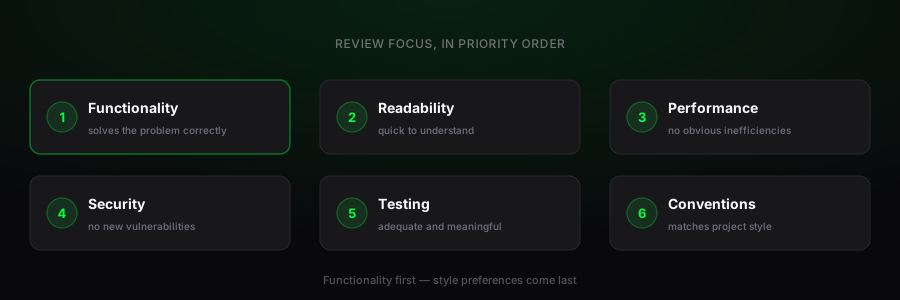
- Functionality first: Does it solve the problem correctly?
- Readability: Can another developer understand this quickly?
- Performance: Are there obvious inefficiencies?
- Security: Any new vulnerabilities introduced?
- Testing: Are tests adequate and meaningful?
- Following conventions: Does it match project style?
Review Communication Guidelines
- Be kind and specific: "Consider renaming X to Y for clarity" reads better than "this is confusing"
- Ask questions instead of making demands: "What happens if Z is empty?"
- Accept that multiple solutions exist: Don't insist on your way if theirs works
- Praise specifics: "Good job handling the edge case here"
- Focus on the code, not the person: Avoid "you" statements
Making Reviews Faster
- Use checklists: Consistent criteria reduce cognitive load
- Leverage tooling: Automated checks for formatting, linting, security
- Review in the morning: Fresh eyes catch more issues
- Set response time expectations: Aim for < 24 hours for most PRs
- Use review templates: Common patterns for bug fixes, features, refactors
When to Skip or Simplify Reviews
- Trivial changes: Typos, documentation fixes, dependency bumps
- Pair programming: Real-time review can replace asynchronous
- Emergency hotfixes: Post-review audit instead of blocking
- Experiments/spikes: Throwaway code needs less scrutiny
Effective code reviews aren't about catching every possible issue—they're about maintaining a sustainable pace of quality improvement. Focus on what matters, communicate respectfully, and continuously refine your process based on team feedback.